
Kitchen planning
Custom Versus Semi-Custom Cabinets: What to Compare
Choose cabinetry by how well the proposed specification fits your room and storage needs, not by the word custom alone. Compare dimensions, interiors, finishes, hardware and the responsibilities behind the order before comparing totals.
Start with the problem the cabinets must solve
Write an inventory of the items that need storage, then identify where they will be used. Daily dishes, tall cooking equipment, cleaning products and occasional serving pieces do not all need the same type of space. A cabinet proposal becomes easier to assess when each area has a defined purpose.
Next, separate problems of organization from problems of fit. An awkward corner, equipment opening or unusual wall may need a different solution from a drawer that simply needs a better interior arrangement. Describe the need before deciding which manufacturing category should supply it.
Understand what each proposal actually offers
Semi-custom does not mean that every line offers the same choices. A manufacturer may provide a range of sizes, finishes and modifications; an individually specified solution may address a requirement that falls outside those options. Ask for the actual product schedule and available changes rather than assuming what a label includes.
KraftMaid describes its own range as semi-custom with multiple cabinet options. That is one manufacturer example, not a Graves supplier endorsement or a statement that all semi-custom lines have identical specifications.
Source: KraftMaid: cabinet sizes and semi-custom options
| Compare this | What the proposal should identify | Question to resolve |
|---|---|---|
| Fit | Cabinet dimensions and any modifications | Who checks final site and equipment dimensions? |
| Storage | Drawers, shelves and internal fittings | Which items will each area hold? |
| Construction | The actual box, door and finish specification | What is included in this selected line? |
| Installation | Measurement, fitting and finish responsibilities | Who resolves a mismatch or missing component? |
Compare construction as a specification
Ask for the material and construction details of the selected cabinet, including the box, fronts, finish and hardware. Avoid treating one material name as a complete description of quality. Two proposals can use similar language while offering different door styles, finishes, fittings or installation scopes.
If a feature matters to you, include it in the written selection record. A sample door can help communicate appearance, but it does not describe the complete cabinet interior or the work required to fit the room. Keep product information and the installation agreement together.
Put responsibility beside every approval
Clarify who measures the room, develops the layout, checks appliance specifications, approves the order and receives deliveries. Ask how changes are handled if a selection, site detail or equipment model changes after approval. The useful answer identifies the responsible party and the next decision.
Owner-supplied items need the same clarity. A separately purchased appliance, sink or cabinet component can affect the overall design without being included in the cabinetry supplier’s responsibility. Resolve those boundaries before approving an order rather than assuming that every related task belongs to the installer.
Make a fair price and timing comparison
Compare cabinet schedules with matching quantities and specifications. Note differences in internal fittings, finished ends, decorative details and installation work. A lower total may reflect a different scope rather than a better price for the same result.
For timing, ask when specifications must be final, what must be checked before ordering and how delivery relates to the construction sequence. This guide does not assign a standard lead time to an entire cabinet category. Use the information for the actual selected product and project.
- Inventory stored items and everyday priorities.
- Compare the same cabinet schedule and fittings.
- Confirm site-measurement and equipment-fit responsibility.
- Identify installation, delivery and finishing inclusions.
- Record changes and approvals before orders are placed.
See cabinetry in the context of a real room
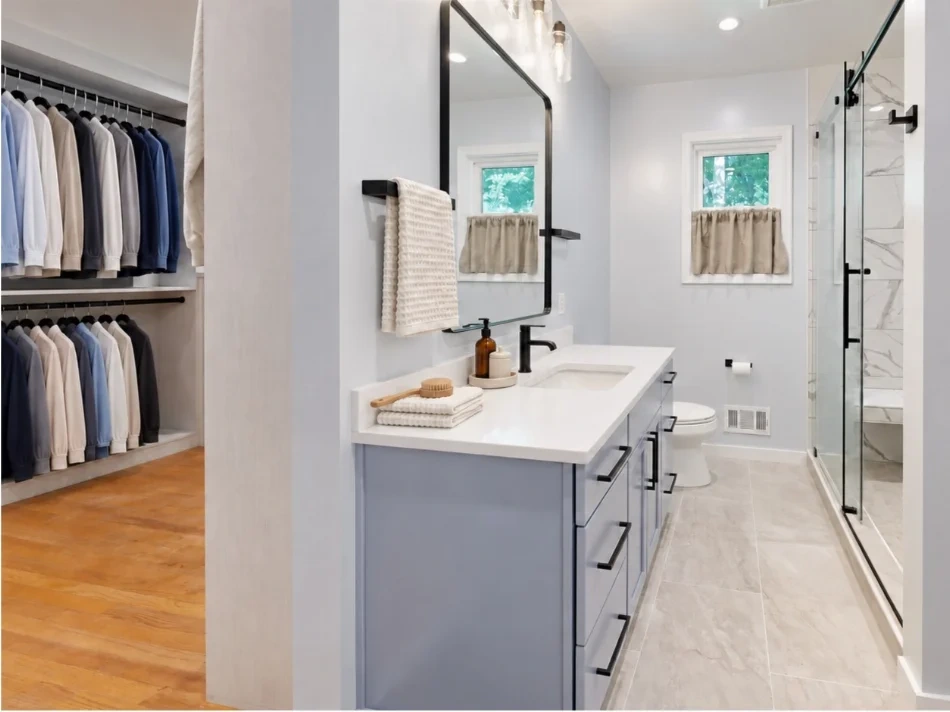
The Fairfax bathroom and closet project links cabinetry to two different uses within one suite. Bathroom storage and clothing storage share a wider design brief while using different arrangements. The Springfield kitchen shows another approach: low storage beneath the windows as part of the kitchen.
Use the project photographs to identify details worth discussing, then bring your own priorities to Graves. The right question is which specification and scope will meet those priorities, rather than whether one category should always win.
Common questions
Is custom always the better choice?
No single label decides the fit for your project. Compare the actual design, product specification, available modifications and installation scope against your storage needs.
Does this guide mean Graves manufactures every cabinet?
No. Confirm design, supply, fabrication and installation responsibilities in the proposal for your actual project.
What should I bring to a cabinetry conversation?
Bring wide photos, a storage inventory, equipment model information if available and a short list of fit or access problems. Mark homeowner measurements as approximate.
Sources
Related reading
Published by Graves Design & Remodeling, Inc. · +17036604554
8346 Traford Ln Suite #7, Springfield, VA 22152